02/04/2026
Shandong Steel Group Achieves a Breakthrough in Customized High-Pressure Boiler Tube Steel
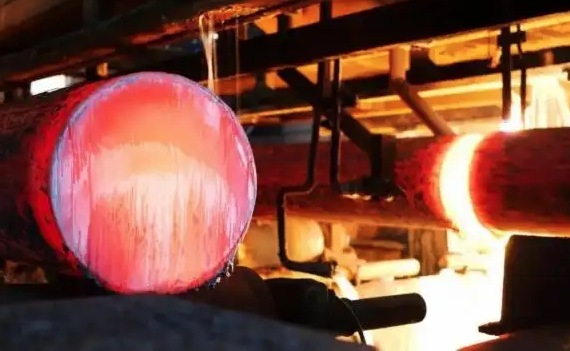
Recently, a batch of high-pressure boiler tube steel customized by Shandong Steel's Special Steel Plant for a key domestic user was successfully delivered.
Read More
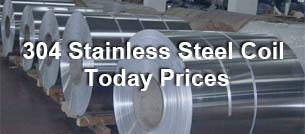
304 stainless steel contains approximately 10% nickel, specifically between 8% and 10.5%.The national standard for 304 stainless steel requires a nickel content of at least 8%.Nickel is a major alloying element in austenitic stainless steel. Its main function is to strengthen and stabilize austenite, resulting in a fully austenitic structure. This gives the steel a good balance of strength, plasticity, and toughness, as well as excellent hot and cold workability, while also improving the thermodynamic stability of austenitic stainless steel.The addition of nickel to austenitic stainless steel and the increase in nickel content lead to increased thermodynamic stability. Therefore, austenitic stainless steel exhibits better rust resistance and resistance to oxidizing media. Furthermore, with increasing nickel content, its resistance to reducing media is further improved. It is worth noting that nickel is also one of the few important elements that enhances the resistance of austenitic stainless steel to transgranular stress corrosion in many media.
The thickness of cold-rolled steel sheet is not a fixed value, but rather determined by specific needs and applications.In the market, the thickness of cold-rolled steel sheet generally does not exceed 6mm. This is due to both market demand and the limitations of the rolling process. Generally, the thickness range of cold-rolled steel sheet can be between 0.1mm and 8mm. Cold-rolled steel sheet is made from hot-rolled steel coils through cold continuous rolling, annealing, and pickling, resulting in reduced plasticity and increased hardness. However, this range is not absolute. In reality, the maximum thickness of cold-rolled steel sheet can be greater, but this usually depends on production processes and equipment capabilities, as well as market demand.
DX54D is a type of cold-rolled steel sheet, typically with a thickness between 0.2 and 3.0 mm, offering good stamping performance and surface smoothness. This type of substrate is usually made from high-purity cold-rolled strip steel with low impurity content. +Z indicates the use of hot-dip galvanizing, with a zinc layer thickness generally ranging from 50-275 g/m² (adjusted according to standards). Hot-dip galvanizing forms a uniform zinc layer on the steel sheet surface, effectively isolating it from air and moisture, and improving the steel's corrosion resistance.
DX54D+Z is a general-purpose ultra-deep drawing steel with a cold-rolled substrate, continuously hot-dip galvanized. It belongs to the high-end category of galvanized steel for cold forming. Its core advantages lie in its low yield strength (≤180MPa), ultra-high elongation after fracture (≥38%), and the deep compatibility with the corrosion resistance of the pure zinc coating. Compared to DX53D+Z, its yield strength is reduced by 15%, and its elongation is increased by 10%, enabling ultra-deep drawing with a drawing ratio ≥2.5. Compared to specialized deep drawing steels (such as DC54D+Z), it is more compatible with general-purpose cold forming equipment, requiring no customized processes, achieving a triple benefit of "complex forming + corrosion resistance + low cost".The DX54D+Z is based on "ultra-low strength + ultra-high versatility formability," with typical indicators based on EN 10346 standards and measured data:Yield Strength (Rp₀.₂): 120-180 MPa. Low yield strength reduces wrinkling during forming, suitable for general-purpose molds.Tensile Strength (Rm): 270-350 MPa. Meets the basic load-bearing requirements of formed parts.Elongation after Fracture (A₈₀): ≥38% (thickness 0.8-2.0mm). Ultra-high ductility suitable for complex deep drawing and curved surface forming.Cupping Value (IE, 1.0mm thick): ≥9.0mm. Represents ultra-deep drawing capability, suitable for large deformation processes.Strain Hardening Index (n value): ≥0.22. Uniform work hardening reducing excessive local thickness reduction.Plastic Strain Ratio (r value): ≥1.8. Low planar anisotropy, high forming accuracy with general-purpose equipment.
China Steel Market
Empowering small and medium-scale steel purchasing
Hot search words:
China Rebar prices China Wire Rod Prices